
Address the IPO cost barrier
The earlier IPO Fund site describes its aim as widening access to public markets by financing the work that precedes an offering.
IPO Cascade is a proposed fund built around the cost of preparing a company to go public. It would pay approved IPO suppliers directly, then use amounts recovered from completed offerings to finance later transactions.
The fund is being set up and is not open to investors. The terms shown are indicative and may change.
The fund is designed to address the expenses that arrive before an issuer can receive IPO proceeds. Its proposed strategy is focused on transaction costs, not unrestricted operating capital.
IPO preparation can require legal, audit, accounting, filing, listing-readiness and communications work before a share is sold. Under the Cascade page’s description, the fund would approve a transaction budget and pay the relevant professional suppliers directly.
The earlier IPO Fund site describes the investor thesis as seeking potential benefit from the difference between private and public equity markets. That is a strategy description, not a forecast or a promise of return.
The diagram is conceptual. It assumes an offering completes and enough is recovered to support later financings. It does not show fund expenses, losses, reserves, timing, or investor distributions.
The earlier IPO Fund site describes its aim as widening access to public markets by financing the work that precedes an offering.
The stated mission is to finance the journey to public markets and participate in the value that journey may create.
The earlier site names integrity, transparency, disciplined stewardship and alignment of interests as its values.
IPOCascade.com describes a direct cascade and an incubator route. Both depend on contract terms and a successful offering. They are structure descriptions, not evidence that any cascade has been completed.
The direct model described on IPOCascade.com has an issuer commit, in its offering documents, to direct an agreed portion of proceeds from a successful IPO toward financing two or more later IPOs. The issuer may pay those transaction costs directly under the structure.
The amount, enforceability, control and obligations would need to be established in the offering and financing documents.
 INCUBATOR ROUTE
In the incubator version, a transaction financier or incubator oversees execution, pays approved suppliers directly and channels recovered proceeds toward later issuers. The source site says the funds pass through the incubator rather than flow directly from one issuer to another.
The incubator’s rights, compensation and any issuer participation depend on its specific legal arrangements.
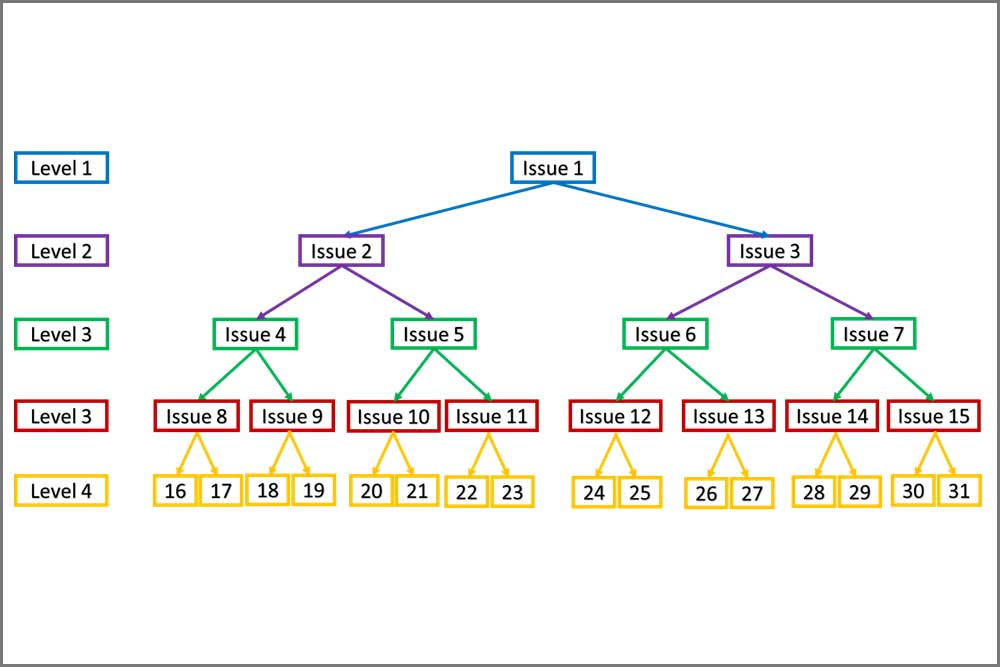
IPOCascade.com explains that the waterfall diagram shows the effect of repeated financings. In the incubator route, the proceeds do not move directly between issuers; an intermediary receives and redeploys amounts under the governing documents.

This source video is included as a local file in this package. Use the player controls to watch it.
Download the MP4These figures describe a proposed model. The definitive fund documents are not available and may state different terms.
The Cascade page says the fund takes a participation in each company it finances. The legal form, calculation and rights attached to that participation are not specified here.
The company’s reimbursement from IPO proceeds is proposed at twice the IPO cost. The source page says the amount is not final.
Each completed IPO is designed to finance two or more later offerings. This depends on closings, recoveries, timing and available capital.
Described as paid to broker-dealers who distribute the fund.
Described as charged on the amount of participation.
Described as applying to performance above a 12% threshold. The threshold is not a return forecast.
The source pages do not establish the fund domicile, manager, offering exemption, investor qualification, minimum subscription, target return, redemption rights, distribution policy, expense allocation or final fee mechanics.
Both sites say the arrangement is subject to future documentation. This package keeps the difference visible instead of treating either description as settled.
Several older articles describe an incubator receiving private shares in each issuer and a put option, with one version stating a 2× return to the incubator per successful IPO and a distribution of 25% of gross revenue after an issue. A level-five illustration starts with US$10 million and projects US$29.5 million in distributions. A separate transaction-funding example shows US$10 million invested and a stated 2.44× total return, and another older page lists 6% cash commission and 6% participation in newly issued shares.
Those pages also state a historical completion count of 180 IPOs out of 201 attempts. The source pages do not provide supporting records in this package. These are older site statements and hypotheticals, not verified results, forecasts, guarantees or current fund terms. They differ from the newer IPOFund.us terms and require independent confirmation before any use.
Cascade Incubator · Transaction Funding · IPO Transactional Funding
Potential approved categories described across the sites include securities counsel, transaction documents, audit and accounting work, filing and production services, listing preparation, governance or transfer-agent setup, permitted communications, roadshow logistics and related professional services.
Every item would require a defined scope, supplier, amount, timing and approval. Ordinary payroll, general operations, founder distributions, personal expenses, unrelated acquisitions and unrestricted marketing are outside the stated transaction purpose.
Direct payment can improve visibility over use of funds. It does not guarantee the work is successful, the IPO closes, or the amount is recovered.
Supplier payment controls do not remove transaction, credit, market or fund-level risk. Review future offering documents for the complete risk discussion.
A company may be delayed, resized, repriced, withdrawn or unable to complete an offering. Preparation spending does not create demand, approval, a listing, a valuation or liquidity.
IPO proceeds may be insufficient or unavailable. A contractual claim is not a guarantee of collection, and professional services may have little resale or recovery value.
No redemption schedule, liquidity right or distribution policy is established. A private investment, if offered, could result in a partial or total loss.
Several issuers can be affected by the same market disruption, financing conditions, regulatory developments or investor sentiment.
Compensation, repayment timing, recourse, security, guarantees, seniority and non-completion obligations are not established by a website description.
Invoice verification and direct payments cannot eliminate fraud, cyber incidents, errors, conflicts, supplier underperformance or inaccurate issuer information.
The earlier capital-provider page calls for a complete structure and offering documents before an investment decision.
Do not treat an expected IPO closing as cash. An issuer-level repayment may not be immediate, sufficient, enforceable or distributable to fund investors.
These answers summarize the source pages. A future prospectus and definitive fund documents would control.
No. The Cascade page says the fund is being set up and is not yet open. Full terms and a prospectus are not available here.
Approved direct pre-IPO costs paid to professional suppliers. It is not described as a fund for ordinary issuer operations or general-purpose cash.
The new page shows a 15%–25% company participation and proposes reimbursement at twice IPO cost from proceeds when escrow is released. It also says the reimbursement amount is not final. The earlier site describes different economics; see the terms-status section.
No. The source page describes the 12% figure as the hurdle above which its proposed 20% performance fee would apply, not as a forecast or promise.
No guaranteed chain is established. The new page presents two or more future IPOs as a design assumption, while actual recycling would depend on completed transactions, recoveries, fund obligations and available capital.
The Cascade page says the fund designates companies that are ready to go public and lack capital for IPO expenses. The selection criteria and approval process are not fully set out on the site.
The new page says the cost rests with the issuer and that definitive terms will explain this. The earlier site says the agreement controls and warns against assuming an automatic waiver. Investor recovery would depend on the actual documents and issuer capacity to pay.
No. The page is informational and has no subscription mechanism. An enquiry does not establish an allocation, eligibility or acceptance of funds.
No. The source pages establish no target return, redemption schedule, liquidity right, principal protection or minimum outcome.
These short guides bring forward distinct points from the earlier IPO Fund articles without repeating the main description.
Incubation concerns financing one offering. Cascade describes a possible relationship among successive transactions; it does not by itself create an issuer obligation or guarantee a fixed number of future financings.
Gross proceeds are not the same as capital left for the business. A funds-flow model should separate supplier costs already paid, unpaid obligations, financing charges and other closing deductions.
Paid costs, unpaid invoices, deposits, cancellation charges and existing obligations can have different treatment. The agreement should address delay and non-completion before funding starts.
Payment review should check the approved scope, budget, engagement, invoice, work status and independently verified payment instructions. Controls do not guarantee performance or recovery.
The analogy concerns a defined project, budget and controlled payments. It does not establish real-estate collateral, insurance, priority, principal protection or guaranteed completion.
Boards should examine the business purpose, total economics, ownership and control effects, authority for spending changes, net proceeds, downside obligations, conflicts and stop conditions.
The earlier site also listed investor files referring to “Intellectual Property Securities.” Those materials were not linked as downloadable files and are not treated as IPO Cascade fund documents in this package.

The new IPOFund.us page describes the process as covered by United States Patent US 12,548,076 B2, “Cascading Initial Public Offerings or Special Purpose Acquisitions Companies for Corporate Capitalization.”
Read Marc Deschenaux’s article on the IPO Cascade.
The fund is in formation. A general enquiry does not create an investment opportunity, subscription, confidentiality arrangement or commitment. Keep an initial message non-confidential.
Identify your organization, country and the information you are seeking. Do not send bank details, identity documents, account credentials or confidential materials by email.
Email listed on the earlier site
info@ipofund.us
This packaged website is static. It does not collect, store or transmit form submissions.
Rue François Bonivard 10, 6th Floor
1201 Geneva, Switzerland
Phone: +41 22 510.25.00
Fax: +41 22 510.25.01
1334 Westwood Boulevard, Suite 6
Los Angeles, CA 90024
United States
Phone: +1 310 871 3668
30 Wall Street, 8th Floor
New York, NY 10005
United States
Phone: +1 (561) 827-1180
These details are carried over from IPOFund.us. Confirm them through current official materials before relying on them.